Mission
The Humanitarianism area of focus brings together UConn faculty from across the humanities and social sciences, as well from the Schools of Social Work, Education, and Law, for an ongoing discussion on the history and experience of humanitarian crisis and action, and the analytical and creative engagements that reflect on them.
We build on the core belief that humanistic approaches are vital to understanding the major humanitarian crises facing global society and to human rights discourse more broadly. The program runs two faculty study groups – The Forum and The History Collective – and sponsors a third initiative, the Magnet Scholar Program.

Initiatives
The Forum
A space for interdisciplinary dialogue on issues that require perspectives and expertise from multiple fields. Contributors represent the fields of history, art history, literature, critical theory, philosophy, political theory, anthropology, sociology, and law.
Contact: Sarah Winter
The History Collective
The History Collective is interested in exploring questions about the history of human rights and humanitarianism from a variety of perspectives, drawing on different fields of historical study, and incorporating interdisciplinary approaches. Most recently, our events considered the history of rights and humanitarianism from the perspectives of public health, eugenics, and race; international policing and international law; national sovereignty, self-determination, and decolonization; and social rights, global health, and health as a right. A central objective of the History Collective is to support all research groups at HRI incorporating historical context and analysis into their programing, exploring how history improves understanding of subjects and issues in their fields.
Contact: Sara Silverstein
Magnet Scholars Program
Through the Magnet Scholars Program, the Humanitarianism research program hosts visiting scholars to UConn annually to lead a series of seminars on current research topics. Past RPH Magnet scholars include:
- Bruce Robbins (Columbia)
- Amanda Anderson (Brown)
- Susan Brison (Dartmouth)
- Ian Baucom (University of Virginia)
- Ariella Azoulay (Brown)
- Timothy Bewes (Brown)
- Elizabeth S. Anker (Cornell)
- Michael Barnett (George Washington University)
- Margaret Moore (Queen’s University, Canada)
- Carolyn Dean (Yale)
News
-

‘We originally conceived of this as a study that extends into Canada, because Canada is the global leader of these community sponsorship initiatives’
-
“The photographs connect us closer to the experiences of migrants transiting through Panama: shoes laying across the migratory reception center, two children under a tent sponsored by U.S. and E.U. aid, a Bible drying under the sun, children playing in the river, and border officials’ increasing presence in Darién.”
-
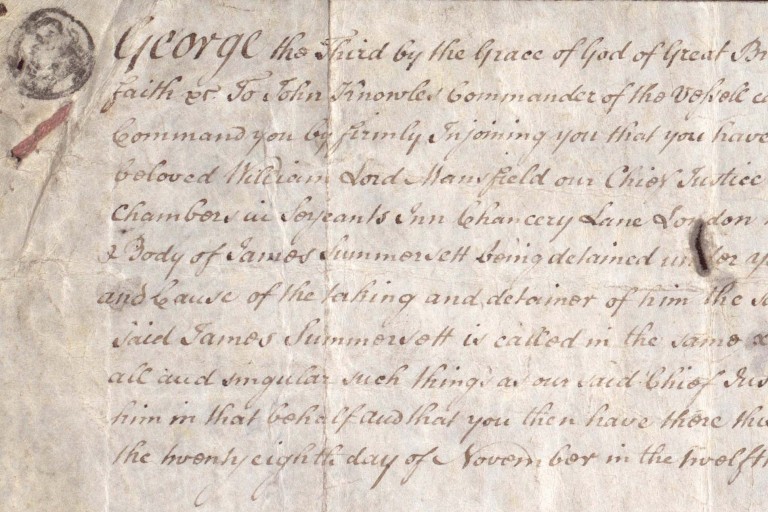
Habeas corpus is more than just a protection against imprisonment, says Sarah Winter in research supported by the National Endowment for the Humanities.

Our People
Leadership

Sara Silverstein
Co-Director, Research Program on Humanitarianism
Associate Professor, History and Human Rights